Pregnant and Planning a U.S. Visit? What the New Birth Tourism Visa Policy Does and Doesn't Change
On September 23, the Secretary of State announced visa restrictions on people who engage in or facilitate birth tourism, three months after the Supreme Court confirmed that nearly every child born in the U.S. is a citizen. The ruling didn't change visitor visa rules, and a 2020 regulation already presumes some pregnant applicants are traveling to give birth. Here's how it fits together.
Published Last updated 5 min read
Not legal advice. This article is general information only. It is not legal advice, and it does not create an attorney–client relationship. Do not rely on it to decide what to do in your own case. Immigration rules change, so confirm current requirements at uscis.gov and talk to a licensed immigration attorney or DOJ-accredited representative.
In this article
Two things happened this summer that pregnant travelers, and families expecting a visiting relative, have been trying to square. On June 30, 2026, the Supreme Court held in Trump v. Barbara that children born in the United States to parents who are here temporarily or unlawfully are U.S. citizens at birth. Then on September 23, Secretary of State Marco Rubio announced a new visa restriction policy aimed at birth tourism.
If you're pregnant and need to visit the U.S. for a wedding, a family emergency or business, you're probably wondering whether you can still get a visa, or use the one you have. Facts are current as of September 27, 2026.
What the Supreme Court decided
President Trump's January 2025 executive order said children born to parents who were unlawfully or temporarily present wouldn't be citizens. Six justices agreed the order couldn't stand, and it's widely reported as a 6 to 3 decision. The details are worth knowing, though.
- Chief Justice Roberts wrote for five justices, joined by Justices Sotomayor, Kagan, Barrett and Jackson, holding that such children "are 'subject to the jurisdiction' of the United States and are citizens at birth under the Fourteenth Amendment's Citizenship Clause."
- Justice Kavanaugh agreed with the result but not the constitutional reasoning. He concluded the order violates a federal statute, 8 U.S.C. 1401(a), and wrote that Congress could change that statute.
- Justices Thomas, Alito and Gorsuch dissented.
So the constitutional holding rests on five votes, and it's the Court's controlling opinion. For anyone born in the U.S. today, the practical answer is the same: they're a citizen at birth. The ruling didn't say anything about visas. The rules for who gets a visitor visa, and for what purpose, are separate and weren't at issue.
The visitor visa rule that has existed since 2020
In January 2020, the State Department amended its B visa regulation, 22 CFR 41.31. It says three things that matter here:
- "Pleasure" travel on a B visa "does not include obtaining a visa for the primary purpose of obtaining U.S. citizenship for a child by giving birth in the United States."
- If a consular officer "has reason to believe" a B visa applicant "will give birth during her stay," the applicant "is presumed to be traveling for the primary purpose of obtaining U.S. citizenship for the child."
- Applicants traveling for medical treatment, which includes giving birth, must show a legitimate reason, that a U.S. doctor or hospital has agreed to treat them, a reasonable estimate of the stay and costs, and lawful means and intent to pay.
That presumption can be overcome, but the applicant carries the burden. An officer who isn't convinced refuses the visa under INA 214(b).
What the September 23 policy adds
The new policy uses a different legal tool: INA 212(a)(3)(C), which makes a person inadmissible if the Secretary of State has reason to believe their entry would have serious adverse foreign policy consequences. According to the Secretary's statement, it targets "individuals who knowingly engage in, have engaged in, or facilitate birth tourism to the United States," and names:
- owners, operators and managers of commercial birth tourism networks,
- visa "fixers" who coach applicants to commit fraud,
- foreign medical providers who knowingly help arrange the travel and the fraudulent use of Medicaid, and
- others who "support, abet, and enable" commercial birth tourism.
The statement adds that "certain family members may also be covered."
Much of the coverage has described this as aimed only at the businesses. The wording is broader than that. It also covers individuals who "have engaged in" birth tourism, which reads as including past travelers, not only the people who organized their trips. The State Department hasn't published criteria for how it will identify people or apply the policy.
What this means if you're pregnant
Applying for a new visa
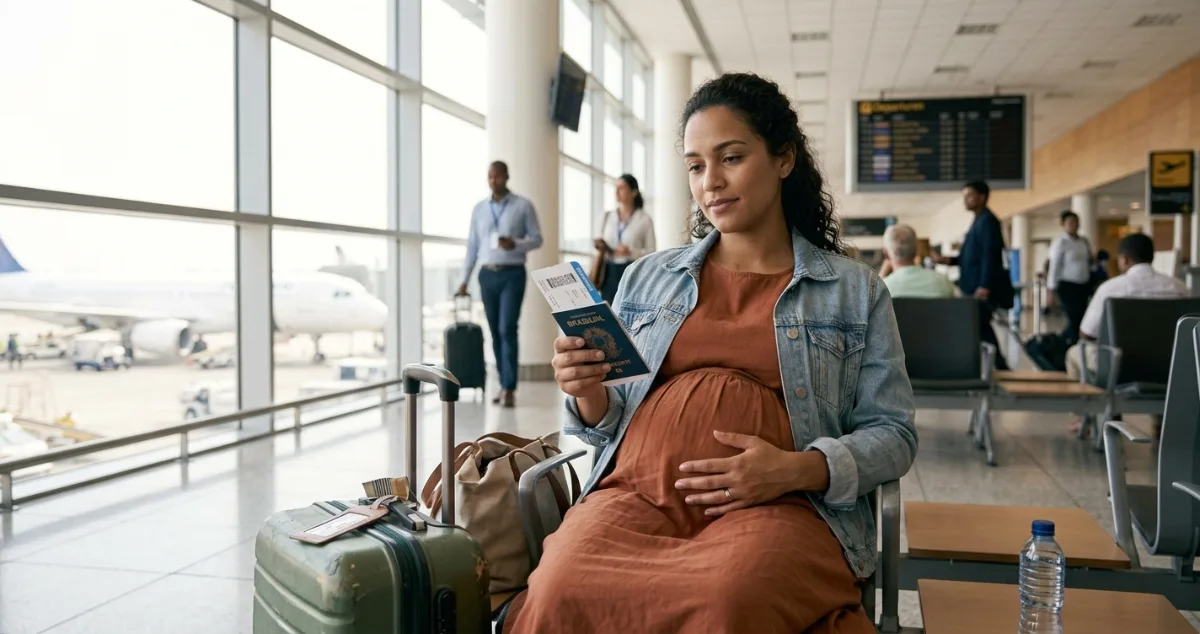
Being pregnant doesn't disqualify anyone from a visitor visa. What matters is the purpose of the trip and whether you'll give birth during it. An applicant who is early in pregnancy, is traveling for a short, well-documented reason, and will return well before the due date is in a very different position from one whose trip overlaps the due date.
- Answer honestly. Don't hide a pregnancy or its timing. The policy is explicitly aimed at people who coach applicants to lie, and a misrepresentation finding can make you permanently inadmissible.
- Bring evidence of the real purpose, such as a wedding invitation, a conference registration or a letter about a relative's illness, plus a return ticket and proof of your job and family ties at home.
- If you do need to give birth in the U.S. for a genuine medical reason, you'll need the documentation the regulation requires: a treating physician or hospital, estimated costs and proof you can pay.
Traveling on a visa you already have
A valid visa lets you ask to be admitted, but Customs and Border Protection decides at the airport. Officers can ask about the purpose of your trip and refuse admission if they believe it isn't a legitimate visitor purpose. Airlines also have their own pregnancy travel limits, usually in the third trimester.
Paying for care
Plan to pay for any medical care in full. Visitors generally aren't eligible for Medicaid, and the new policy specifically mentions fraudulent use of Medicaid. Unpaid hospital bills from a previous visit can also count against you in a later visa application.
Children already born in the U.S.
Nothing in the new policy affects the citizenship of children already born here. After Barbara, a child born in the U.S. to a visitor is a citizen, entitled to a U.S. passport. What the policy can affect is future visas for the parents or for people who arranged the trip.
Official sources
- Protecting the Sanctity of U.S. Citizenship: A New Visa Restriction Policy, Sept. 23, 2026 (State Department)
- Trump v. Barbara, No. 25-365, decided June 30, 2026 (Supreme Court, PDF)
- 22 CFR 41.31, Temporary visitors for business or pleasure (eCFR)
- Visas: Temporary Visitors for Business or Pleasure, final rule, 85 FR 4219, Jan. 24, 2020 (Federal Register)