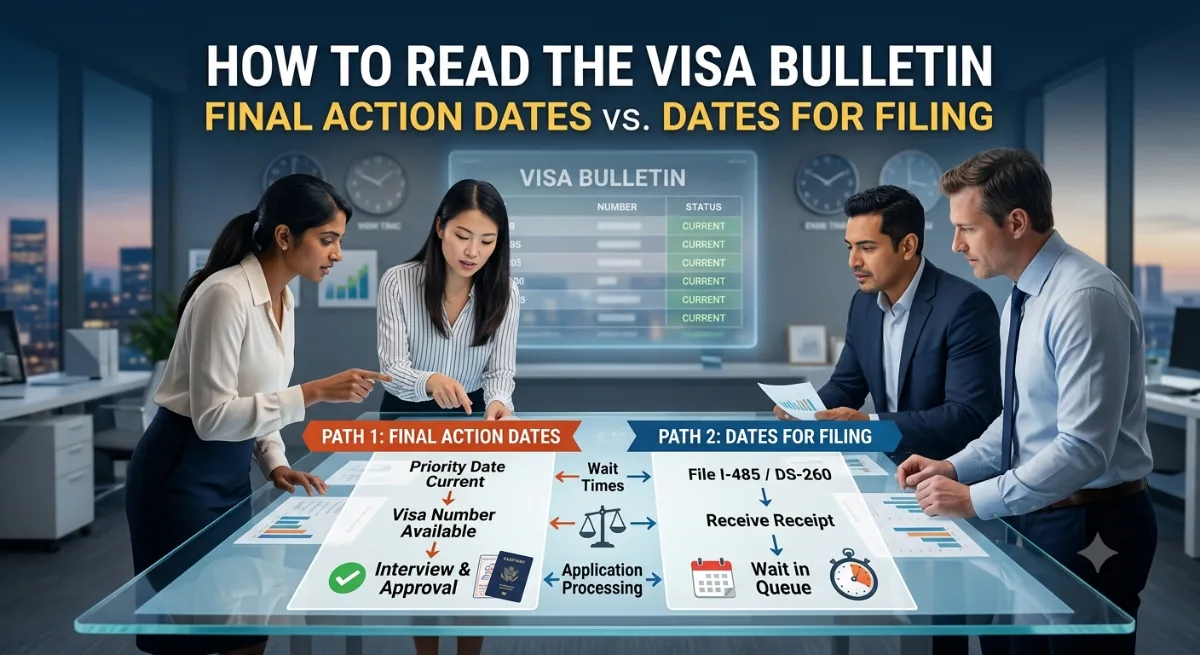
What "Current" Means in the Visa Bulletin (and What It Doesn't)
When your category shows "C" in the Visa Bulletin, it doesn't mean your green card is approved or that you can stop worrying. Here is what "current" does mean, and the mistakes people make when they read it.
Published Last updated 3 min read
Not legal advice. This article is general information only. It is not legal advice, and it does not create an attorney–client relationship. Do not rely on it to decide what to do in your own case. Immigration rules change, so confirm current requirements at uscis.gov and talk to a licensed immigration attorney or DOJ-accredited representative.
In this article
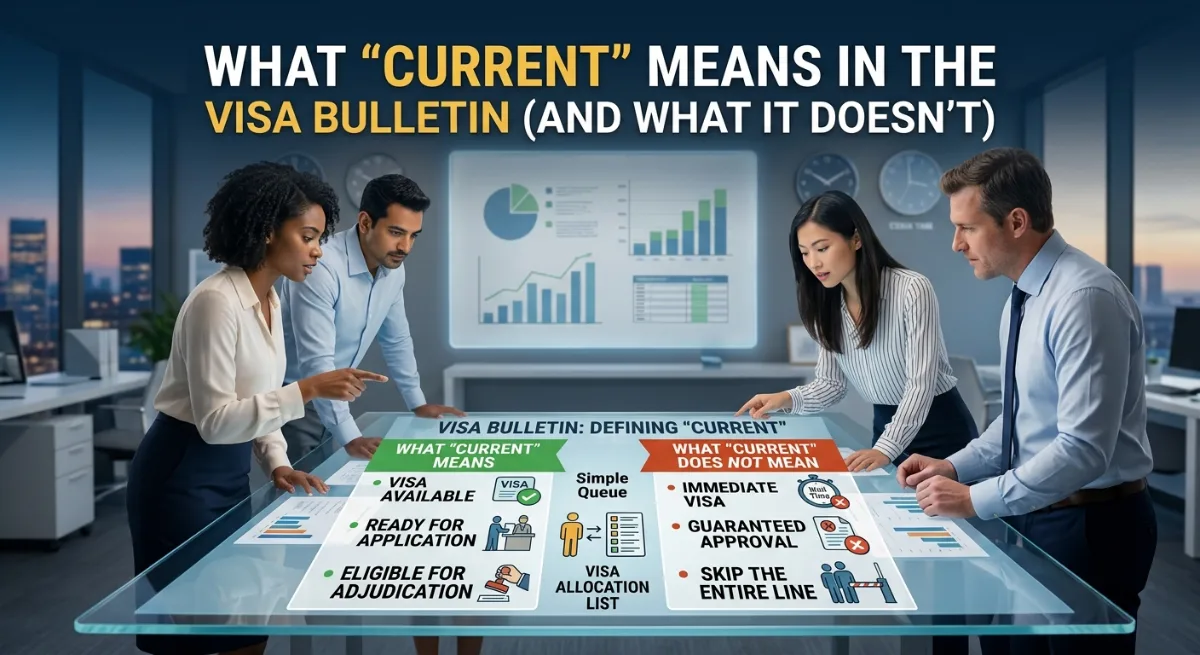
In the Visa Bulletin, a "C" where a date should be means the category is current. People see it and assume they are done waiting. Sometimes they are close. Often they have misread what it says.
The State Department's definition is short: "C" means numbers are authorized for issuance to all qualified applicants. USCIS puts it as immigrant visas being immediately available to all qualified adjustment applicants. The opposite symbol, "U," means numbers are not authorized for issuance. Everything important in the definition is in the word qualified. This article covers what "current" gives you, what it doesn't, and the mistakes that follow. Facts are current as of September 21, 2026.
What "current" means
A category is current when there is no backlog in it. Anyone with an approved petition in that category, with any priority date, is treated as having a visa number available. Your priority date stops mattering, because there's no line to wait in. (For how priority dates and cut-off dates normally work, see how to read the Visa Bulletin.)
That is all it means. The rest of the process still applies.
Six common misunderstandings
1. "Current means my green card is approved."
It means a visa number is available. You still need an approved petition, and then either a filed and adjudicated I-485 or a consular immigrant visa interview. Background checks, a medical exam where required, and any interview all still happen. And the word "qualified" carries weight: you have to be admissible and otherwise eligible.
2. "Current on the Dates for Filing chart means I can get approved."
The two charts do different jobs. A "C" on the Dates for Filing chart, or a date that is later than yours, may allow you to file, if USCIS says to use that chart in the month you file. Approval is governed by the Final Action Dates. A case can sit pending under a filing date and wait for the Final Action Date to catch up.
3. "Current in one column means current for everyone."
The chart is read by category and by country of chargeability, which is usually your country of birth. A "C" for "All Chargeability Areas" doesn't apply if your country has its own column with a date in it. Look at the column that belongs to you.
4. "Once current, always current."
Not necessarily. USCIS defines retrogression as what happens when more people apply for visas than there are visas available, and the effect is that cutoff dates move backward. A category can be current one month and carry a date the next. If your I-485 is already pending when that happens, it generally has to wait until a visa number is available again before it can be approved.
5. "Everyone needs to be current."
Immediate relatives of U.S. citizens, meaning spouses, unmarried children under 21, and parents of citizens who are 21 or older, aren't subject to yearly numerical limits, so they don't wait for a bulletin date at all. For them the bulletin is irrelevant. Everyone else in a family or employment preference category is measured against it. USCIS explains the immediate-relative category on its immediate relatives page.
6. "I'm current, so I should file today."
Being current tells you a visa number is available. It doesn't tell you that filing is right for you. Whether you can adjust status in the U.S. at all depends on how you entered, your current status, your record and more. USCIS has also said that adjustment of status is discretionary, and in 2026 told officers to weigh discretion carefully in adjustment cases. That is a good moment to talk to an attorney before you file, not after.
What to do when your category turns current
- Confirm which chart USCIS wants you to use for the month you'll file, on its filing charts page.
- Check that your petition is approved (or filed together, if your category allows concurrent filing) and that you have every required document. USCIS's August 2026 guidance means a missing required document can now lead to a denial without a request for evidence. See that change explained.
- Keep your documents organized and ready. Because a category can retrogress, the window can close, so you want to be able to file quickly.